Table of Contents
Innovative Features of the EPA Approved Gasoline Engine Sharp Mowing Blades Tracked Wireless Radio Control Slasher Mower
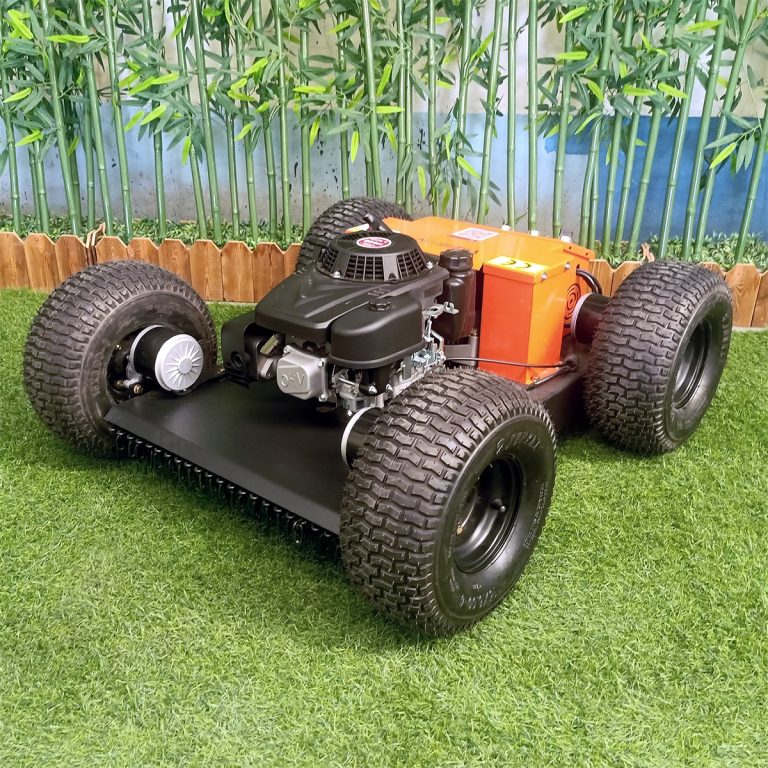
 The EPA approved gasoline engine sharp mowing blades tracked wireless radio control slasher mower represents a significant advancement in lawn care technology. At its core, the machine is powered by a V-type twin-cylinder gasoline engine, specifically the Loncin brand model LC2V80FD. This engine delivers an impressive rated power of 18 kW at 3600 rpm, ensuring robust performance for various mowing tasks.
Equipped with sharp mowing blades, this machine effortlessly tackles thick grass and challenging terrain. The combination of the powerful engine and high-quality blades allows for clean cuts, making it an excellent choice for both professional landscapers and avid gardeners. The operational efficiency is further enhanced by the machine’s design, which minimizes downtime and maximizes productivity.
The EPA approved gasoline engine sharp mowing blades tracked wireless radio control slasher mower represents a significant advancement in lawn care technology. At its core, the machine is powered by a V-type twin-cylinder gasoline engine, specifically the Loncin brand model LC2V80FD. This engine delivers an impressive rated power of 18 kW at 3600 rpm, ensuring robust performance for various mowing tasks.
Equipped with sharp mowing blades, this machine effortlessly tackles thick grass and challenging terrain. The combination of the powerful engine and high-quality blades allows for clean cuts, making it an excellent choice for both professional landscapers and avid gardeners. The operational efficiency is further enhanced by the machine’s design, which minimizes downtime and maximizes productivity.


Versatile Applications and Enhanced Control
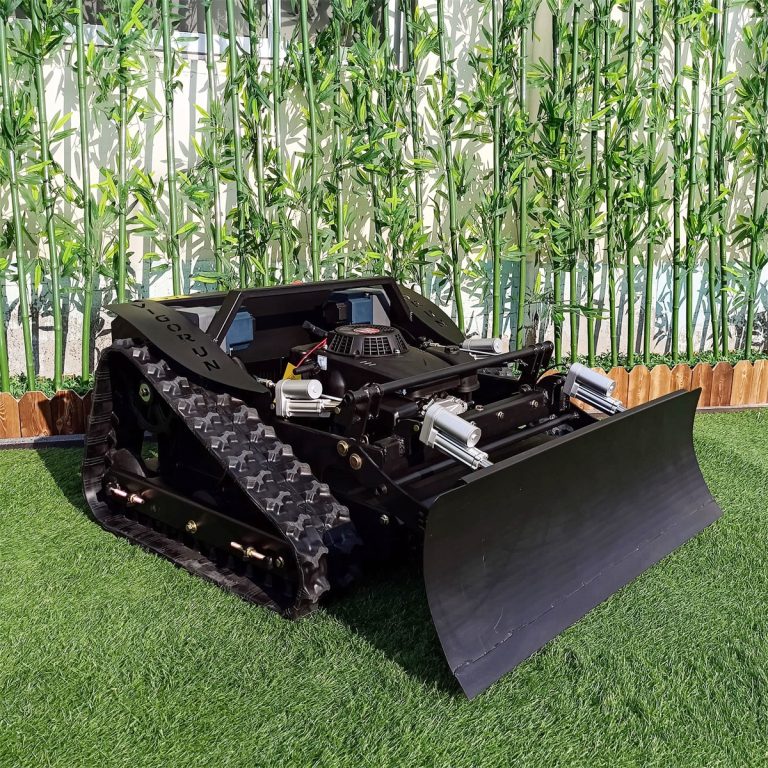
The versatility of the EPA approved gasoline engine sharp mowing blades tracked wireless radio control slasher mower is truly remarkable. It is equipped with electric hydraulic push rods that allow for remote height adjustment of attachments, ensuring optimal performance across different mowing conditions. From heavy-duty grass cutting to shrub clearing, this machine adapts seamlessly to various tasks. An innovative feature of this mower is its ability to utilize interchangeable front attachments, including options such as a 1000mm-wide flail mower, hammer flail, forest mulcher, angle snow plow, or snow brush. This multi-functional capability makes it ideal for vegetation management and snow removal, proving its worth in demanding environments.
 The wireless radio control system enhances operator convenience, allowing users to maneuver the mower with ease from a distance. The intelligent servo controller regulates motor speed and synchronizes the movement of the left and right tracks, enabling the mower to travel in a straight line without constant adjustments. This not only reduces operator workload but also minimizes risks associated with over-correction, particularly on steep slopes.