Table of Contents
Features of the EPA Approved Gasoline Engine 100cm Cutting Blade Tracked Wireless Operated Angle Snow Plow
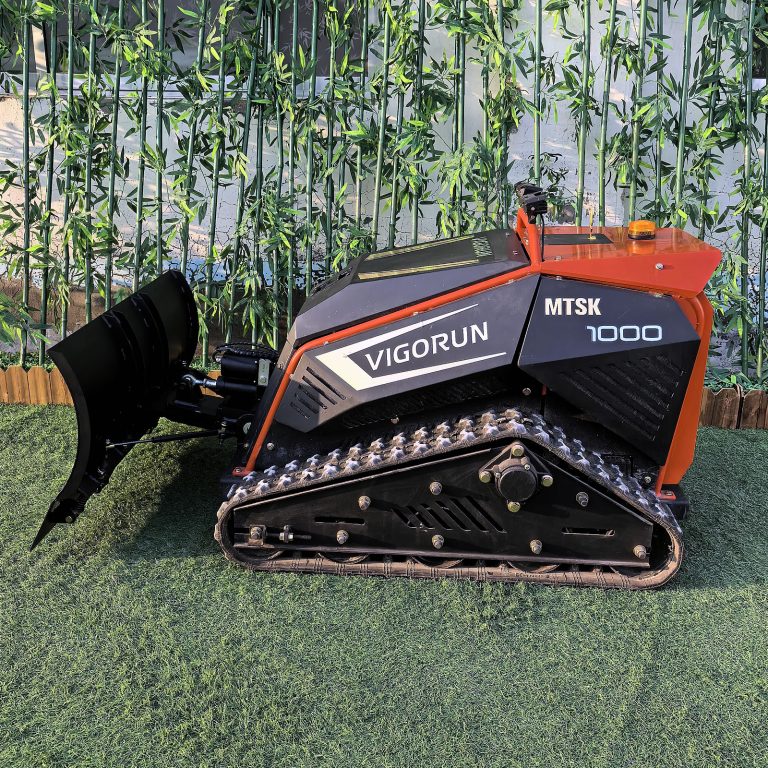
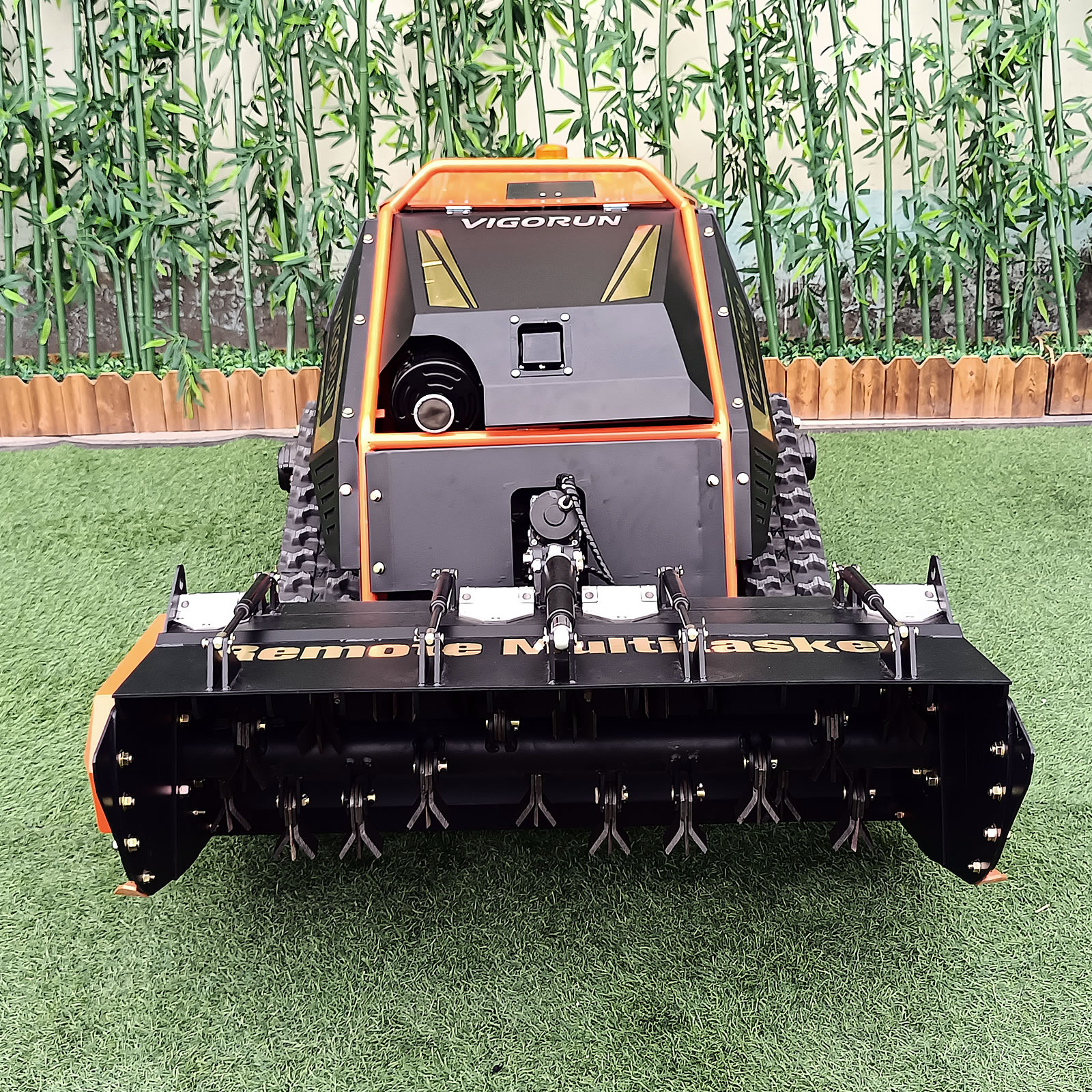
 The EPA approved gasoline engine 100cm cutting blade tracked wireless operated angle snow plow is a state-of-the-art machine designed for efficiency and reliability in snow removal tasks. Powered by a V-type twin-cylinder gasoline engine, specifically the Loncin brand model LC2V80FD, this snow plow delivers a rated power of 18 kW at 3600 rpm. With a robust 764cc engine, it ensures strong performance even in challenging conditions.
One of the standout features of this snow plow is its clutch system, which engages only when the engine reaches a predetermined rotation speed. This design enhances operational safety and efficiency, allowing users to engage the plow only when ready. Moreover, the machine’s electric hydraulic push rods make it easy to adjust the height of attachments remotely, providing added convenience during operation.
The EPA approved gasoline engine 100cm cutting blade tracked wireless operated angle snow plow is a state-of-the-art machine designed for efficiency and reliability in snow removal tasks. Powered by a V-type twin-cylinder gasoline engine, specifically the Loncin brand model LC2V80FD, this snow plow delivers a rated power of 18 kW at 3600 rpm. With a robust 764cc engine, it ensures strong performance even in challenging conditions.
One of the standout features of this snow plow is its clutch system, which engages only when the engine reaches a predetermined rotation speed. This design enhances operational safety and efficiency, allowing users to engage the plow only when ready. Moreover, the machine’s electric hydraulic push rods make it easy to adjust the height of attachments remotely, providing added convenience during operation.


Versatility and Performance of the Snow Plow
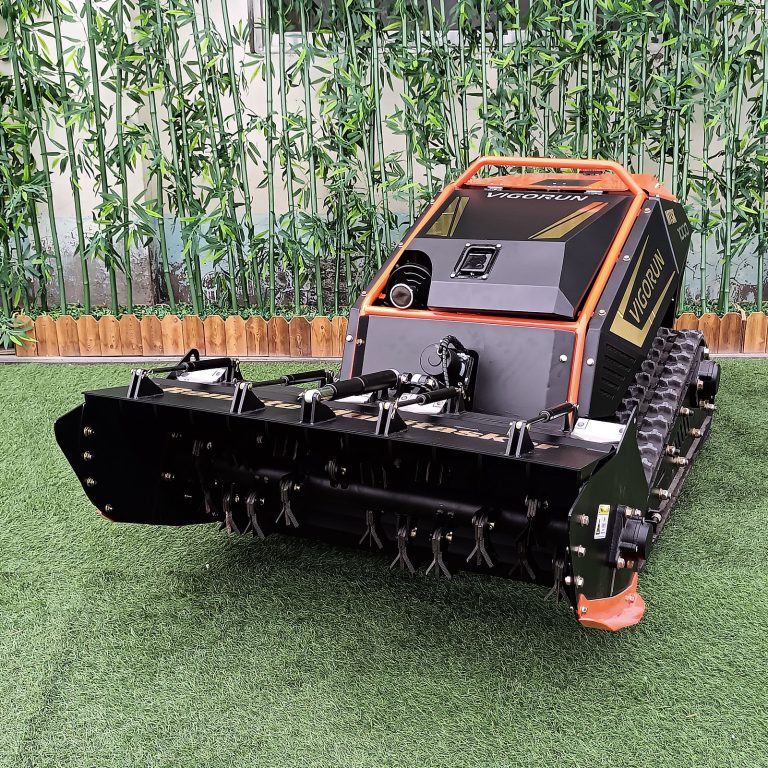
The EPA approved gasoline engine 100cm cutting blade tracked wireless operated angle snow plow is designed for multi-functional use, making it an ideal choice for various applications beyond just snow removal. Users can equip this machine with a range of interchangeable front attachments including a 1000mm-wide flail mower, hammer flail, forest mulcher, or snow brush. This versatility ensures it can tackle heavy-duty grass cutting, shrub and bush clearing, and effective vegetation management. With its powerful design, the snow plow excels in demanding conditions. The combination of a high reduction ratio worm gear reducer and two 48V 1500W servo motors provides immense output torque, ensuring the machine can climb steep inclines with ease. Importantly, the built-in self-locking function keeps the machine stationary when throttle is not applied, preventing unintended sliding and enhancing overall safety.
This innovative snow plow also boasts a higher voltage configuration compared to many competing models. The 48V power setup lowers current flow and heat generation, allowing for longer continuous operation while significantly reducing the risk of overheating. As a result, users can rely on stable performance even during extended snow removal tasks.
With its powerful design, the snow plow excels in demanding conditions. The combination of a high reduction ratio worm gear reducer and two 48V 1500W servo motors provides immense output torque, ensuring the machine can climb steep inclines with ease. Importantly, the built-in self-locking function keeps the machine stationary when throttle is not applied, preventing unintended sliding and enhancing overall safety.
This innovative snow plow also boasts a higher voltage configuration compared to many competing models. The 48V power setup lowers current flow and heat generation, allowing for longer continuous operation while significantly reducing the risk of overheating. As a result, users can rely on stable performance even during extended snow removal tasks.