Table of Contents
Features of the Strong Power Petrol Engine
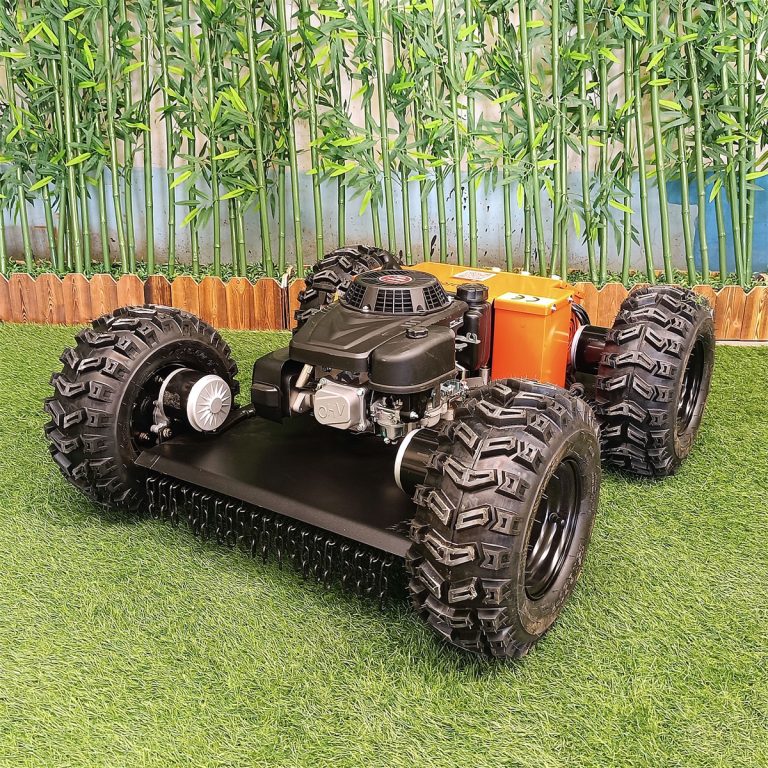
 The strong power petrol engine cutting height adjustable tracked remote-driven brush mulcher is a remarkable piece of machinery designed to tackle a variety of landscaping and vegetation management tasks. It is equipped with a V-type twin-cylinder gasoline engine, specifically the Loncin brand model LC2V80FD. This engine boasts a rated power of 18 kW at 3600 rpm, ensuring robust performance for demanding applications.
 The machine’s powertrain is optimized for high torque output and climbing capabilities. With a built-in self-locking function, it guarantees safety by preventing unintended movement when both power is off and throttle is not applied. This feature is crucial for operators working on slopes, as it effectively mitigates the risks of accidental sliding during operation.
Equipped with a high reduction ratio worm gear reducer, this brush mulcher multiplies the torque from the already powerful servo motors, allowing for impressive climbing resistance. The mechanical self-locking capability further enhances safety during power outages, ensuring that the machine remains stationary even when conditions change unexpectedly.
The machine’s powertrain is optimized for high torque output and climbing capabilities. With a built-in self-locking function, it guarantees safety by preventing unintended movement when both power is off and throttle is not applied. This feature is crucial for operators working on slopes, as it effectively mitigates the risks of accidental sliding during operation.
Equipped with a high reduction ratio worm gear reducer, this brush mulcher multiplies the torque from the already powerful servo motors, allowing for impressive climbing resistance. The mechanical self-locking capability further enhances safety during power outages, ensuring that the machine remains stationary even when conditions change unexpectedly.
Versatile Applications and User-Friendly Design


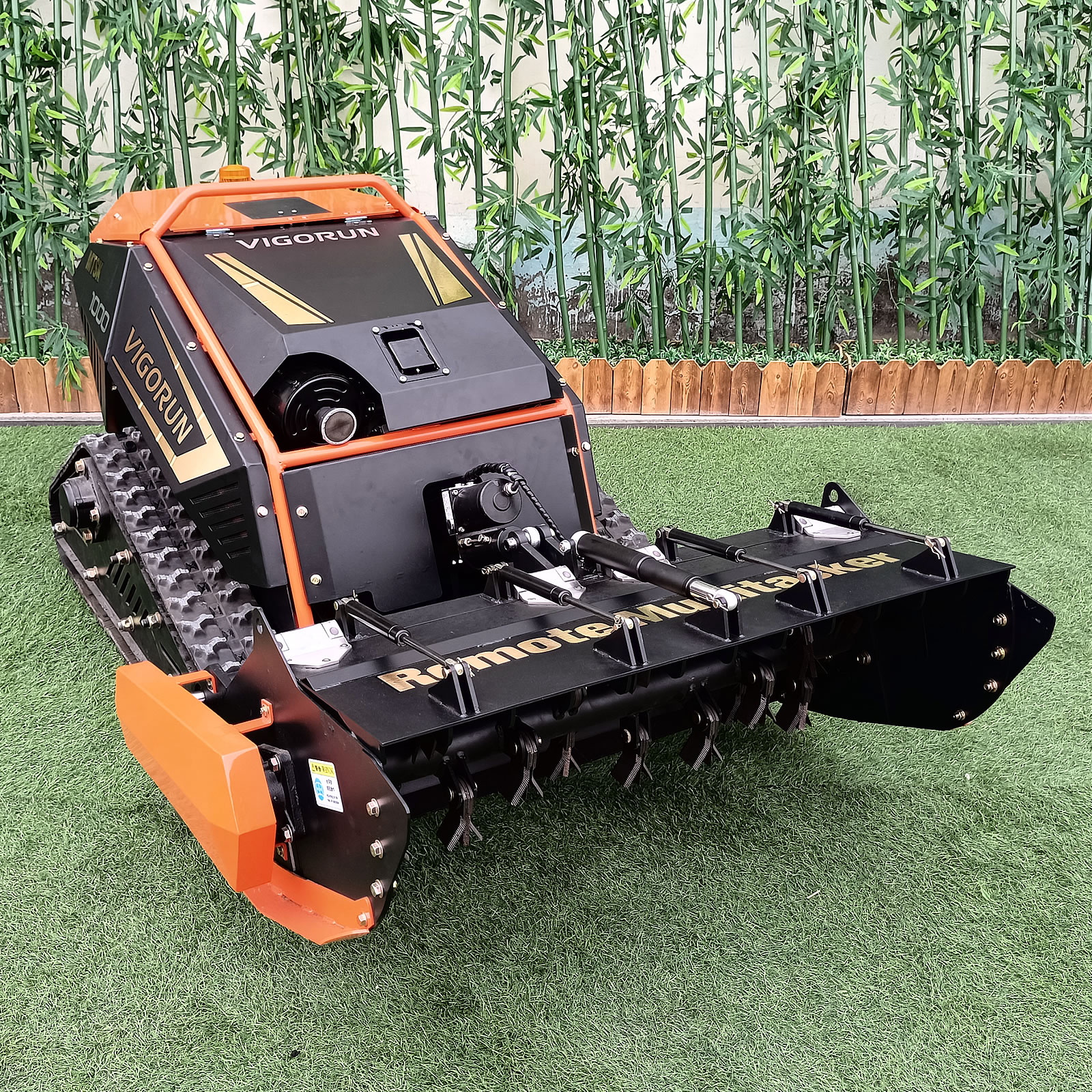
 One of the standout features of the strong power petrol engine cutting height adjustable tracked remote-driven brush mulcher is its versatility. Designed for multi-functional use, it can be fitted with various attachments such as a flail mower, hammer flail, forest mulcher, angle snow plow, or snow brush. Each attachment allows the machine to excel in different tasks, ranging from heavy-duty grass cutting to effective snow removal.
The electric hydraulic push rods enable remote height adjustment of attachments, which greatly enhances usability. This feature allows operators to easily customize the cutting height without dismounting the machine, making it more convenient and efficient for various landscaping challenges.
Furthermore, the intelligent servo controller plays a critical role in maintaining operational efficiency. By precisely regulating motor speed and synchronizing the left and right tracks, it ensures smooth navigation across uneven terrains. This minimizes the need for constant adjustments, thereby reducing operator fatigue and improving overall safety during operation.
One of the standout features of the strong power petrol engine cutting height adjustable tracked remote-driven brush mulcher is its versatility. Designed for multi-functional use, it can be fitted with various attachments such as a flail mower, hammer flail, forest mulcher, angle snow plow, or snow brush. Each attachment allows the machine to excel in different tasks, ranging from heavy-duty grass cutting to effective snow removal.
The electric hydraulic push rods enable remote height adjustment of attachments, which greatly enhances usability. This feature allows operators to easily customize the cutting height without dismounting the machine, making it more convenient and efficient for various landscaping challenges.
Furthermore, the intelligent servo controller plays a critical role in maintaining operational efficiency. By precisely regulating motor speed and synchronizing the left and right tracks, it ensures smooth navigation across uneven terrains. This minimizes the need for constant adjustments, thereby reducing operator fatigue and improving overall safety during operation.