Table of Contents
Features of the EPA Gasoline Powered Engine Travel Speed 4Km Versatile Remote Control Flail Mulcher
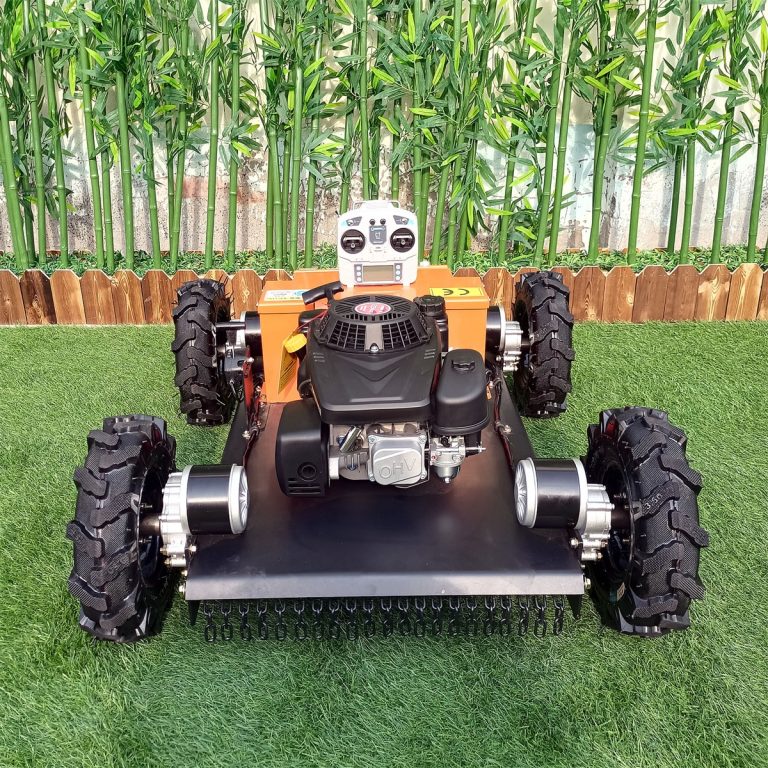
 The EPA gasoline powered engine travel speed 4Km versatile remote control flail mulcher is equipped with a powerful V-type twin-cylinder gasoline engine. This model utilizes the Loncin brand, specifically the LC2V80FD, which boasts a rated power of 18 kW at 3600 rpm. The robust 764cc gasoline engine ensures strong performance and reliability, making it a suitable choice for various landscaping and clearing tasks.
 Furthermore, the engine is designed with an advanced clutch system that engages only when a predetermined rotation speed is achieved. This feature enhances operational efficiency by preventing unnecessary wear on the engine and ensuring that power is delivered precisely when needed. Users can expect a seamless experience while operating this machine, thanks to its thoughtful engineering.
Safety is paramount with the EPA gasoline powered engine travel speed 4Km versatile remote control flail mulcher. The built-in self-locking function guarantees that the machine remains stationary unless both power is activated and throttle is applied. This significantly reduces the risk of unintended movement during operation, providing peace of mind for the operator.
Furthermore, the engine is designed with an advanced clutch system that engages only when a predetermined rotation speed is achieved. This feature enhances operational efficiency by preventing unnecessary wear on the engine and ensuring that power is delivered precisely when needed. Users can expect a seamless experience while operating this machine, thanks to its thoughtful engineering.
Safety is paramount with the EPA gasoline powered engine travel speed 4Km versatile remote control flail mulcher. The built-in self-locking function guarantees that the machine remains stationary unless both power is activated and throttle is applied. This significantly reduces the risk of unintended movement during operation, providing peace of mind for the operator.
Versatility and Performance of the Remote Control Flail Mulcher

 Additionally, the intelligent servo controller plays a critical role in regulating motor speed and synchronizing the left and right tracks. This technology allows the mower to maintain a straight path without constant adjustments from the remote, thus reducing operator workload. This feature is particularly beneficial when working on steep slopes, where over-correction can lead to safety hazards.
The EPA gasoline powered engine travel speed 4Km versatile remote control flail mulcher stands out in its category, especially with its 48V power configuration. Compared to many competing models using lower voltage systems, this higher voltage setup decreases current flow and minimizes heat generation. As a result, users can enjoy longer continuous operation with reduced risks of overheating, ensuring reliable performance throughout extended mowing tasks.
Additionally, the intelligent servo controller plays a critical role in regulating motor speed and synchronizing the left and right tracks. This technology allows the mower to maintain a straight path without constant adjustments from the remote, thus reducing operator workload. This feature is particularly beneficial when working on steep slopes, where over-correction can lead to safety hazards.
The EPA gasoline powered engine travel speed 4Km versatile remote control flail mulcher stands out in its category, especially with its 48V power configuration. Compared to many competing models using lower voltage systems, this higher voltage setup decreases current flow and minimizes heat generation. As a result, users can enjoy longer continuous operation with reduced risks of overheating, ensuring reliable performance throughout extended mowing tasks.