Table of Contents
Features of the 2 Cylinder 4 Stroke Gasoline Engine Low Power Consumption Crawler Radio Controlled Hammer Mulcher
The 2 cylinder 4 stroke gasoline engine low power consumption crawler radio controlled hammer mulcher is a powerful and versatile machine designed for various applications. At its core is the V-type twin-cylinder gasoline engine, specifically the Loncin brand model LC2V80FD. This engine provides a remarkable rated power of 18 kW at 3600 rpm, ensuring that it can tackle even the most demanding tasks with ease. This innovative machine is equipped with a robust clutch mechanism that engages only when the engine reaches a predetermined rotation speed. This feature not only enhances operational efficiency but also contributes to the overall longevity of the engine by preventing unnecessary wear during low-speed operations. In addition to its powerful engine, the machine boasts advanced safety features, including a built-in self-locking function. This ensures that the machine remains stationary unless both power is applied, and the throttle is engaged, significantly reducing the risk of unintended movement during operation.
 The high reduction ratio worm gear reducer further enhances the performance of this machine by multiplying the torque generated by the servo motors. This design allows for exceptional climbing capabilities, making it suitable for use on steep terrain while maintaining safety and stability.
Versatility and Efficiency in Operation
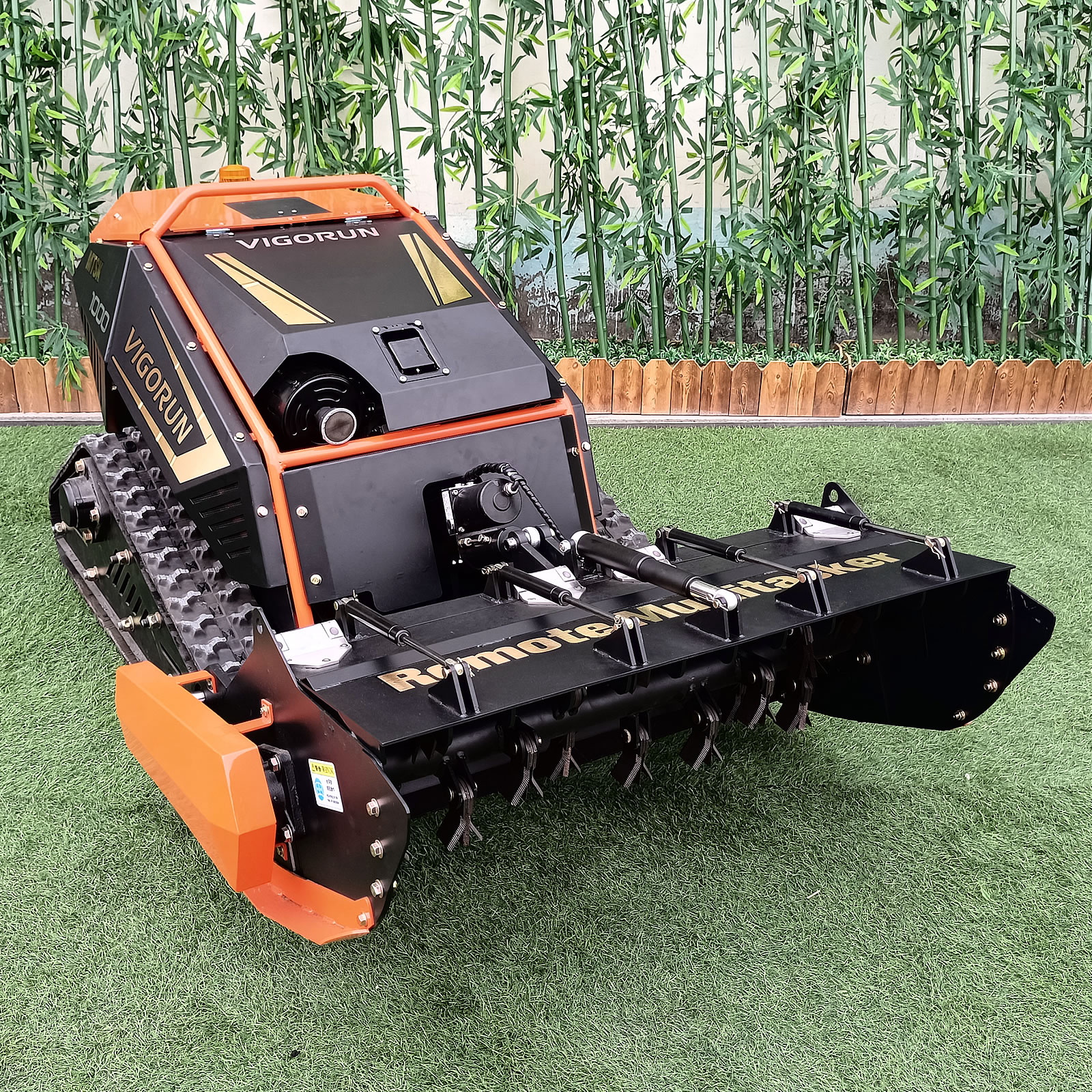
 Moreover, the intelligent servo controller plays a crucial role in enhancing operational efficiency. It precisely regulates motor speed and synchronizes the left and right tracks, allowing for smooth and straight-line travel without continuous adjustments from the operator. This minimizes the risks associated with over-correction, particularly on steep slopes.
 Unlike many competing models that utilize a 24V system, this machine’s 48V power configuration results in lower current flow and reduced heat generation. Consequently, it enables longer operational times while mitigating overheating risks, ensuring consistent performance even during extended slope mowing tasks.